

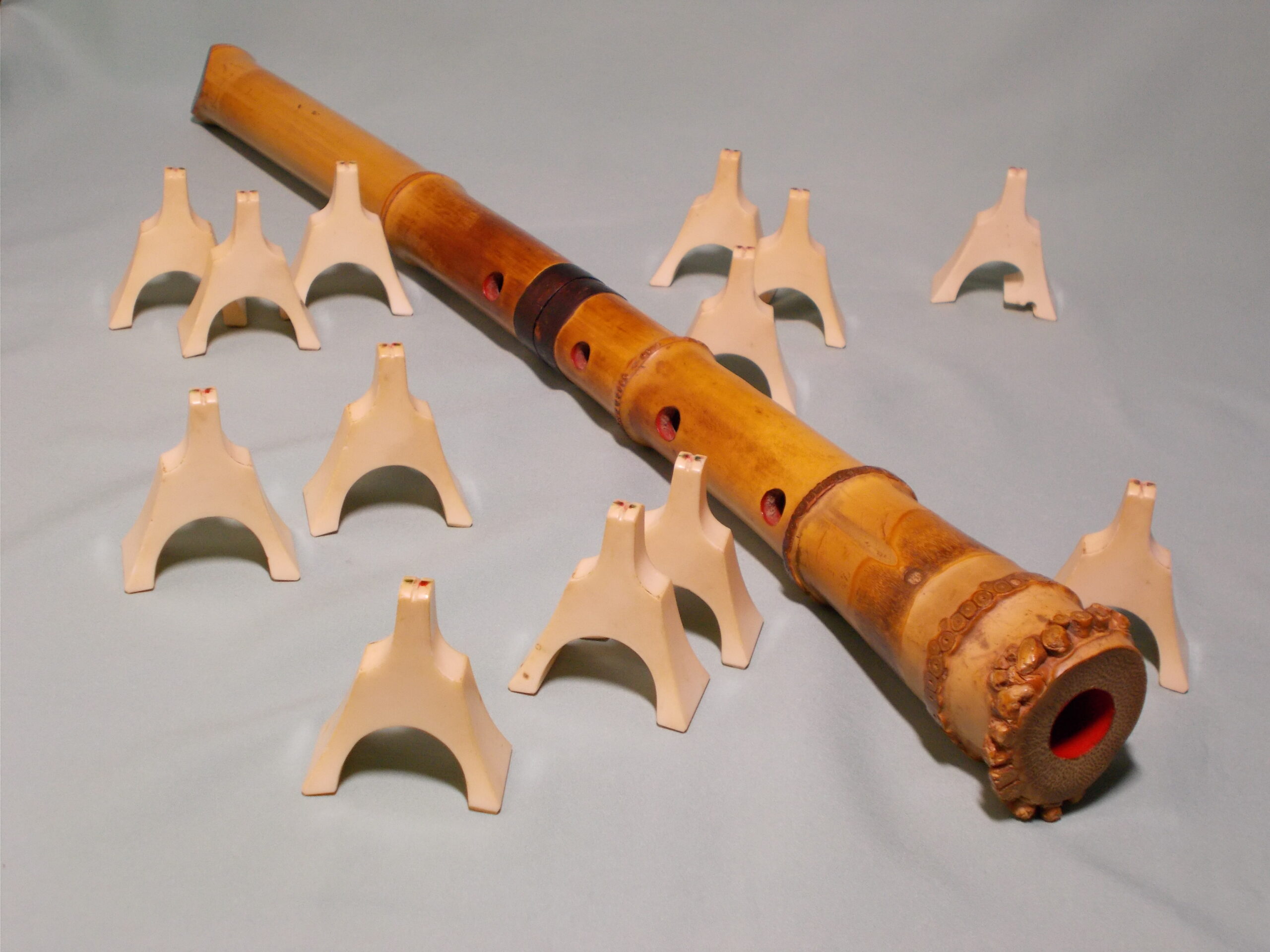
Have you ever been moved by the haunting, breathy tones of the Japanese shakuhachi?
This traditional Japanese bamboo flute has a long, storied history, rooted in both spirituality and music—and it continues to inspire listeners around the world.
Let’s journey through its origins, evolution, and cultural importance.
Check out our upcoming concert featuring the koto and shamisen in Kyoto!
Immerse yourself in the soothing sounds of traditional Japanese music and create unforgettable memories.

Origins of Shakuhachi
Scholars generally agree that precursors to the shakuhachi were introduced to Japan from China (possibly via the Korean peninsula) during the Nara period (8th century).
These early bamboo flutes bore resemblance to the Chinese xiao, had more holes (six, or sometimes more), and featured different construction from the shakuhachi we know today. They were used in gagaku, the imperial court music, as part of ceremonial and orchestral contexts.
However, by the late Heian or early medieval period, these early flutes more or less fell out of common use in court music.
Revival and the rise of Shakuhachi
During the Muromachi period and into the Edo period, the shakuhachi underwent significant revival.
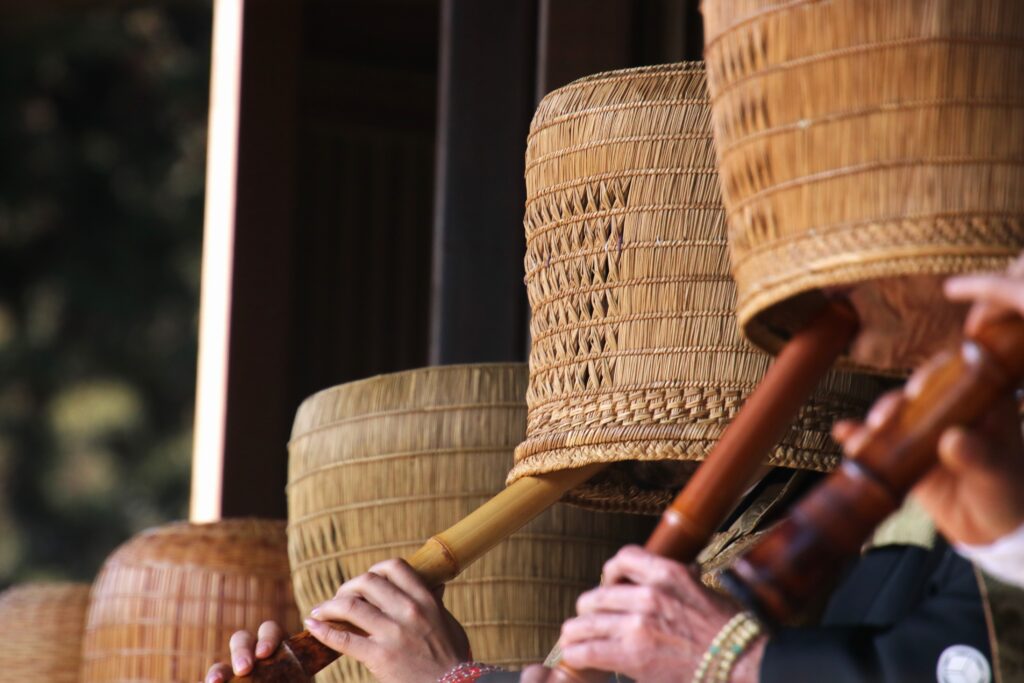
In the Edo period (1603-1868), the Fuke sect of Zen Buddhism became deeply associated with the shakuhachi. Monks known as komusō (“monks of emptiness”) played the shakuhachi not only as music but as meditation practice—called suizen (“blowing Zen”).
They wandered, beggars and meditators, often wearing a basket‐like woven hat (tengai) over their heads to mask identity and detach from self.
The repertoire specific to this practice is called honkyoku, the “original pieces.” These solo works are deeply meditative, slow, emphasizing breath, tone color, subtle ornamentation, and silence as much as sound.
Construction and musical characteristics of Shakuhachi
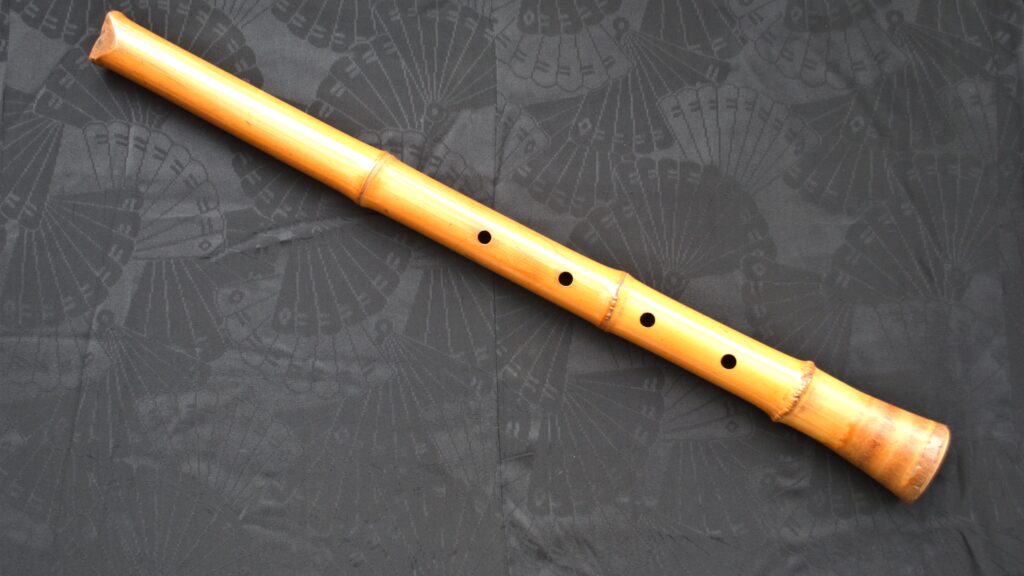
The name shakuhachi comes from an old Japanese unit of length: shaku (approx. 30.3 cm) + hachi (“eight”), meaning “one shaku and eight sun,” roughly 1.8 shaku, about 54 cm in its standard size.
Modern shakuhachi typically have four finger holes in front and one in back, but in earlier versions there were more, and variations existed.
The scale is pentatonic (minor pentatonic in many cases), and players produce pitches not only by fingering but by partially covering holes, altering blowing angle, using subtle embouchure changes, etc. This allows a wide expressive range—different timbres, bending tones, airy breaths, silence, piercing and soft tones.
From exclusive spiritual tool to broader musical role
For much of its spiritual history, the shakuhachi was held by the komusō monks and had restricted use—it was not widely played in secular contexts.
With the Meiji Restoration (from 1868), the suppression of many Buddhist sects and the modernization pushed many traditional practices to transform. The Fuke sect was disbanded; shakuhachi was, for a time, restricted, then increasingly became available to broader society.
By late 19th / early 20th century, shakuhachi was used in ensemble music together with koto and shamisen (in sankyoku 三曲), as well as in folk music, arts performances, and was no longer only a tool of monks.
Modern Developments of the Shakuhachi
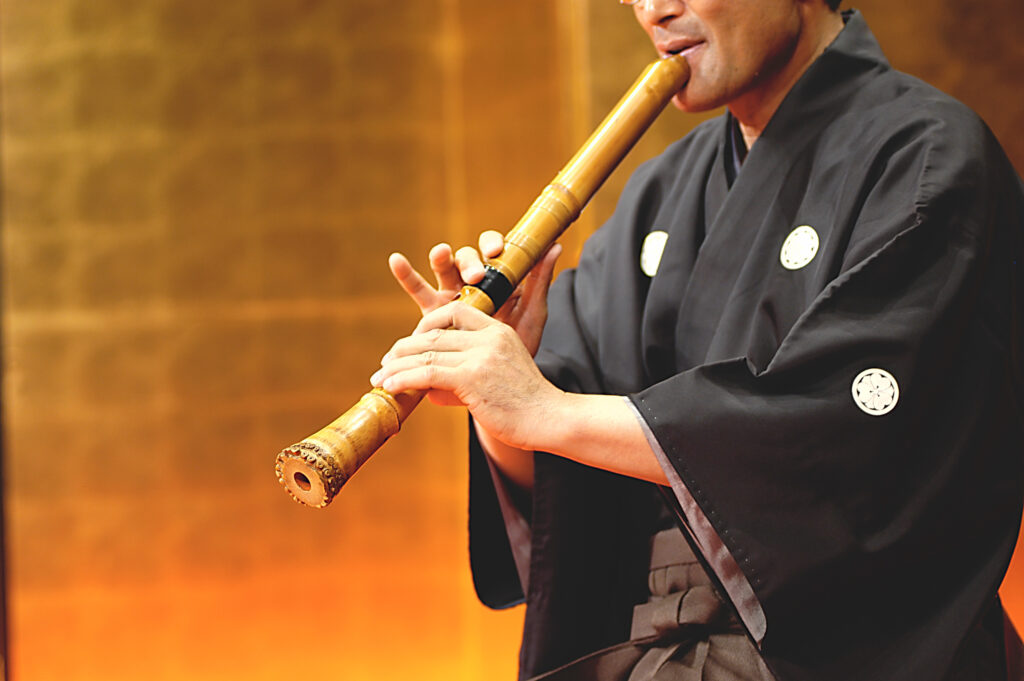
In the 20th and 21st centuries, shakuhachi players and composers have expanded its repertoire, blending it with Western instruments and genres—classical, jazz, contemporary experimental music.
There are many notable schools (ryū), such as Kinko-ryū, Tozan-ryū, Myōan, etc. For example, Kurosawa Kinko collected many honkyoku pieces and helped formalize the repertoire in the Kinko-ryū school.
Master players like Atsuya Okuda are known for preserving subtle and traditional styles (e.g. jinashi shakuhachi) which emphasize more “natural,” raw timbre, minimal adjustment, quieter, more meditative sounds.
Today, shakuhachi is taught and performed worldwide. Its spiritual roots remain respected, but its voice continues in concert halls, recordings, fusion projects, film soundtracks, and experimental works.
The future of the shakuhachi
With over a thousand years of history, the shakuhachi remains a living tradition. Its appeal lies both in its spiritual depth and in its adaptability—soft and meditative, loud and expressive.
As artists explore new techniques, build new instruments, collaborate across cultures, the shakuhachi seems poised to continue surprising and moving people, while still carrying the weight of its heritage.
Want to experience the magic of the shakuhachi firsthand?
Join us for regular collaboration concerts at Kujo-yu in Kyoto, where the shakuhachi meets the koto and shamisen in an intimate and inspiring setting.
These performances showcase the timeless beauty of Japan’s traditional instruments, blending ancient melodies with fresh interpretations.
Please note that depending on the performance, another instrument may be featured instead of the shakuhachi.
If you would like to confirm the program in advance, feel free to contact us.


